

Amrisha Prashar
on 3 November 2016
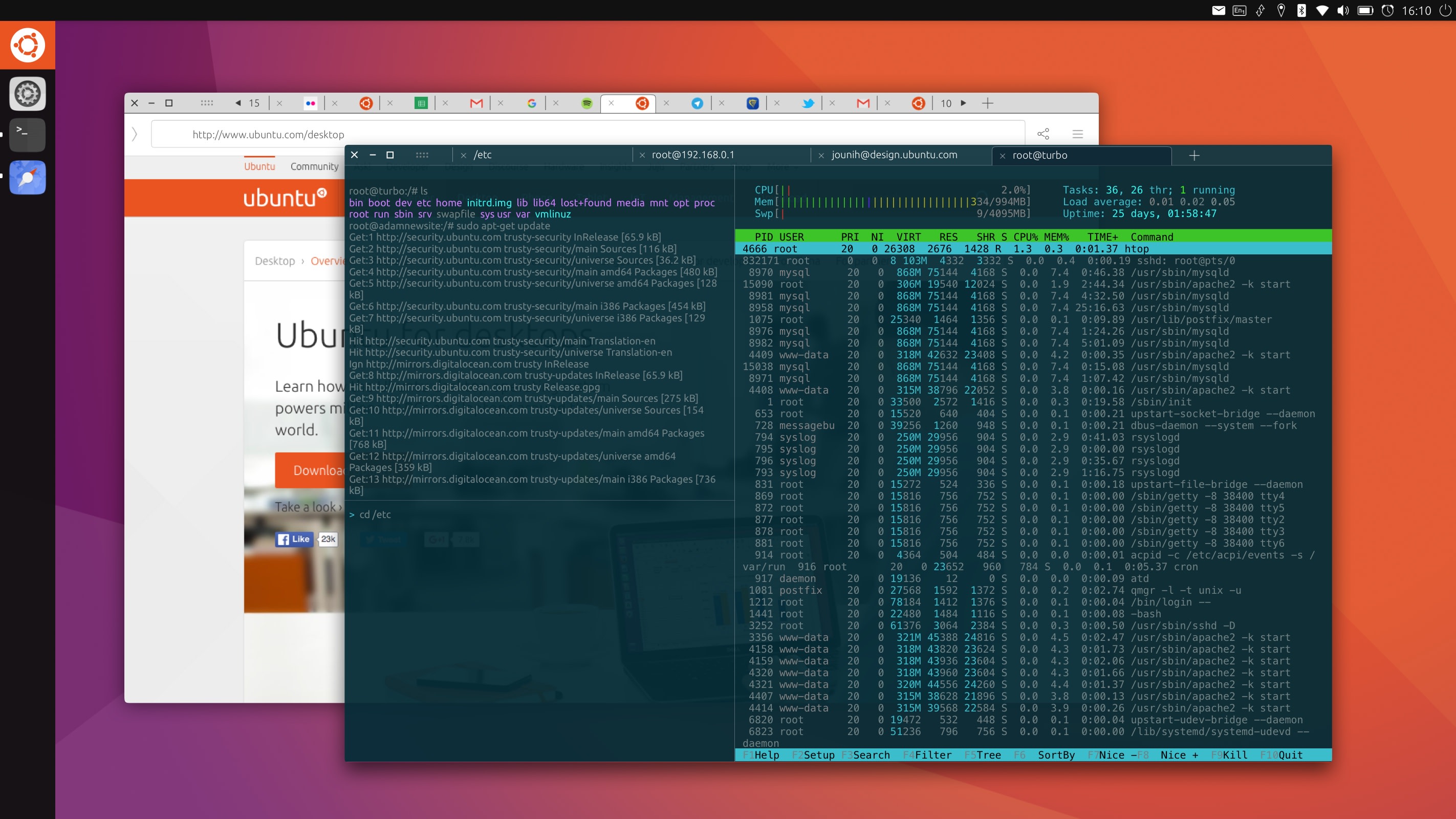
The recent release of Ubuntu 16.10 Yakkety Yak includes a developer preview of Unity 8 for desktop and the installation of snaps!
The universal ‘snap’ Linux packages combine both container and packaging technologies to give developers a single format to distribute their apps and services from cloud to personal computing and IoT. Some of the snaps available on desktop include LibreOffice, Krita, and Rocket.Chat which can be distributed as universal packages across Linux distributions.
‘Rocket.Chat, the open source web chat platform had to support over 30 deployment platforms across many different on-premises and cloud solutions. Making Rocket.Chat available as a snap was a simple process which now means any user can install the service in a few minutes as opposed to requiring hours of configuration by a system administrator. This is definitely one of the easiest distribution methods we have ever used.’ Gabriel Engel, CEO of Rocket.Chat
For the Unity 8 session it’s not yet possible to run a full set of desktop apps, however, there are some additional apps as snaps that can be installed in Edge mode on the 16.10 image.
If you do not know what Edge mode is… this is a good opportunity to discover channels! Channels are a mechanism available from the snap store to distribute an application at the various stages of its lifecycle… from the daily builds with the edge channel , to beta for your early testers , to candidate for the last minute tests and stable releases. They will make the whole process of managing early access to a release super simple. And make it just as easy for users to try apps that are still work in progress.
- Stable – Most users consume this channel, as it’s the most polished, stable and tested version
- Candidate – Used to vet uploads that should require no further code changes before moving to stable
- Beta – Used to provide preview releases of semi-stable changes
- Edge – the most raw release!
Gallery App:
sudo snap install --edge --devmode gallery-appCamera App:
sudo snap install --edge --devmode camera-appAddress Book App:
sudo snap install --edge --devmode address-book-appCalendar App:
sudo snap install --edge --devmode ubuntu-calendar-appAnd to note, snaps are frequently updated which means you’ll always be running on the freshest version as soon as it’s available! Happy snapping.


